

-
ВОЄННИЙ Щоденник



-
Життя






-
FICTION/OPINION COLUMN





-
СПОРТ



-
Нетлінне
-






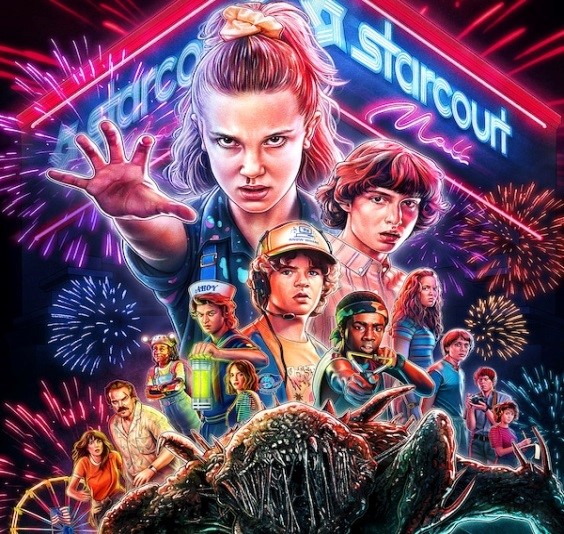
As the fifth and final season of Stranger Things approaches, it’s the perfect time to revisit the show’s darkest and most psychologically charged chapter: Season 4. Here, horror takes an absolutely new form. It is no longer the mythical and vague Demogorgon, nor the powerful and physical Mind Flayer. It is something much more sophisticated and exquisite, woven from memory, mourning and deep emotion. Vecna is not just a villain as we are used to portraying them. He’s something created in our own minds, yet nonetheless dangerous and terrifying.
Previous seasons of Stranger Things relied on external and very understandable threats: interdimensional creatures, shadowy labs, and Cold War paranoia. Yet Vecna shifts the horror inward. His attacks don’t come from outside—they come from within his victims. Each one is targeted at the moment they’re emotionally vulnerable, mentally isolated, and trapped in their own unresolved trauma. Somewhere from where it hits the hardest.
Chrissy, the first victim, is haunted not by monsters, but by a toxic relationship with someone who’s supposed to support the most—her own mother. Fred is consumed by the guilt of causing a fatal car accident.
Max is spiraling into self-blame after the death of her stepbrother, Billy. Vecna doesn’t just kill these characters; he feeds on their memories, replays their worst moments, and exploits their silence. Just like the real PTSD does. When your own memories are not reliable anymore and where there are no more upgrades from current reality. The cycle is incredibly difficult to break from. In this sense, Vecna becomes a stand-in for repressed trauma—the monster we don’t talk about, the fear that festers in the dark corners of the mind, the trap of our own creation.
Vecna’s attacks are deeply personal and incredibly targeted at the weakest points of the mind. He, like a virus, invades, turning everything into an illusion. Victims are lured into mental spaces that look like dream sequences but operate like PTSD flashbacks. The show literalizes the way trauma lingers in memory, how past pain can resurface without warning, and how hard it is to tell reality from psychological collapse when you’re in the grip of unresolved hurt.
Not only Vecna’s strength is our own mind, he’s using the dwelling on uncontrollable to bring it to an enormous scale and make you feel like there’s nothing out of it.
What’s brilliant is how Stranger Things makes these internal struggles cinematic. The floating bodies, ticking clocks, and grotesque visions are horror aesthetics—but beneath the surface, they represent the emotional weight we carry and the danger of leaving it unchecked.
If trauma is the ground Vecna walks on, guilt is his weapon. Every victim is marked by guilt—especially Max. Her arc in Season 4 is a masterclass in how young people process grief and blame themselves for things outside their control. Vecna preys on that guilt, whispering doubts, weaponizing her self-loathing, and nearly killing her because of it.
In a larger sense, Vecna thrives on silence and ignoring. His victims are those who haven’t shared, who haven’t asked for help, and whose environment haven’t noticed the change on time. The series gently but deliberately implies that vulnerability isn’t weakness—it’s a lifeline. Max is only saved when her friends find a way to anchor her to reality with music and presence. It’s an oddly hopeful message for a show that delights in gloom: healing starts with connection.
Vecna’s origin story ties the metaphor together. Once Henry Creel—an abused child turned killer—his transformation into Vecna represents what happens when pain curdles into hatred. He’s not an alien invader. He’s homegrown horror. He’s not from the Upside Down; he became and, in a certain sense, created the Upside Down, just like trauma can reshape the mental landscape of a person if left untreated.
Even Eleven’s journey becomes more poignant in this context. Her powers—tied to memory and emotional control—aren’t just supernatural; they’re symbolic of reclaiming narrative, confronting the past, and choosing to face the pain rather than run from it.
Vecna works because he terrifies the viewer on two different but connected levels: viscerally and psychologically. He’s scary because he cracks bones—but he’s unforgettable because he reflects us. He’s every regret you’ve tried to forget, every memory you’ve pushed aside, every moment you wished you’d done something differently.
In that way, Stranger Things 4 isn’t just horror—it’s catharsis. Vecna is the show’s way of saying: the scariest things don’t crawl out of portals. They live in us. And they’re born in us.




















Залишити відповідь