


-
ВОЄННИЙ Щоденник









-
FICTION/OPINION COLUMN



-
ФОТОБУК






-
Нетлінне
-






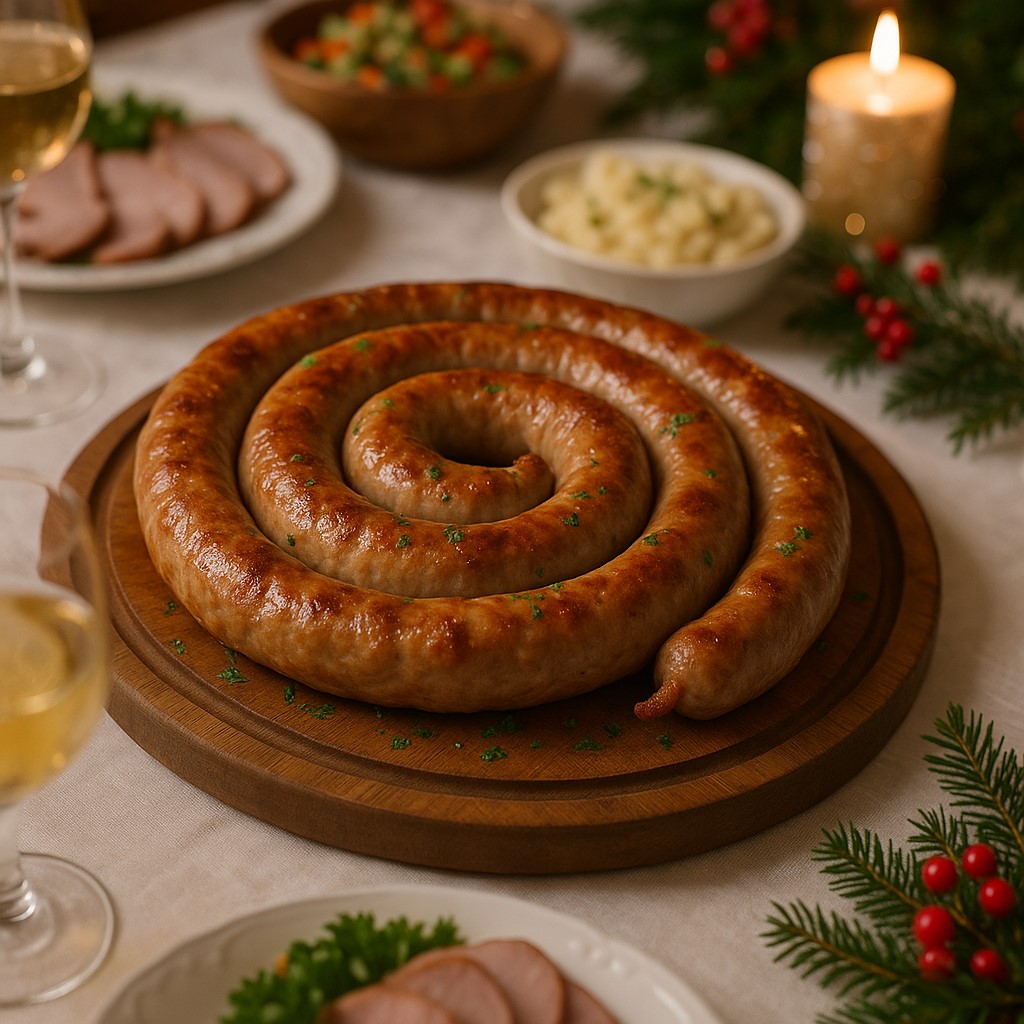
Homemade sausage is more than just a meat dish. It’s a ritual, a family tradition, and a symbol of generosity, hospitality, and festive spirit. It holds a special place in Ukrainian culinary culture, forming part of the ceremonial cuisine that developed over centuries.
The first mentions of meat stuffed into intestines appear in chronicles from the time of Kyivan Rus. In the 12th century, travelers and envoys visiting princely courts described feasts featuring meat dishes boiled or baked in pork casings, served with honey and bread. At the time, meat was highly valued, and preserving it well was a sign of household mastery.
By the Cossack era, sausage had taken on a clearer form — both festive and practical. Cossacks going on campaigns brought dried or smoked sausage, as it kept well and provided strength on the road. In the Sich, according to some accounts, sausage was prepared during great celebrations — to mark victories, fairs, or religious holidays.
In rural life, homemade sausage became an inseparable part of the winter farming cycle. Pigs were usually slaughtered in late autumn, after the first frosts — typically in November or early December. This day was often considered festive and even solemn. It was called the “great slaughter,” “rizanka,” or “hud” — because on that day there was truly an abundance of food, work, and good mood. Every part of the meat was used: for frying, salting, lard, ham, and, of course, sausage.
Sausage-making was a ritual that brought the entire family together. Everyone had their role: someone washed the casings, someone chopped the meat, someone grated garlic — and the elders supervised the process.
The meat was hand-chopped — always fresh, never frozen — and mixed with spices: salt, black and allspice pepper, sometimes with grated garlic, onion, summer savory, or coriander. In some regions — like Zakarpattia or Bukovyna — paprika or a bit of wine was added.
The casings were carefully stuffed by hand, using a wooden or metal spoon, to avoid tearing. They were tied with thread or string, forming sausage rings.
Sausage was fried in an oven, baked in clay pots or roasting pans to achieve a juicy crust. Part of it was left raw for freezing, part dried or smoked over fruitwood fires.
Homemade sausage was always a showpiece — placed in the center of the festive table. At Christmas, it was part of the required dishes served with kutia. At Easter, it went into the basket blessed at church.
In many regions, sausage was a respectful gift. It was given to godparents, in-laws, priests. A good sausage was like a kind word: always pleasant to receive.
Today, despite changes in lifestyle, homemade sausage remains a symbol of authenticity and family warmth. It’s now cooked in ovens or even slow cookers. But those who have once tasted the real thing — oven-roasted, with a hint of smoky crust, garlic aroma, and juicy meat — will never forget it.
























Залишити відповідь