

-
ВОЄННИЙ Щоденник


-
Життя





-
FICTION/OPINION COLUMN





-
СПОРТ



-
Нетлінне
-





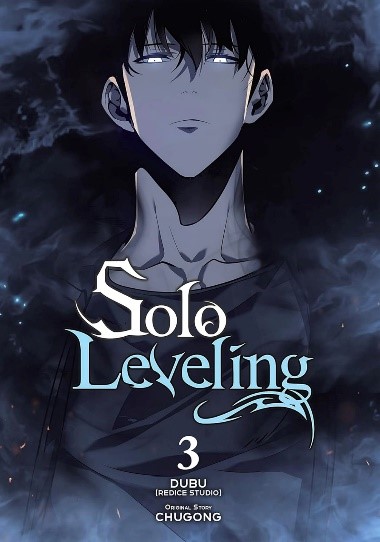
Few webtoons or webnovels have achieved global popularity quite like Solo Leveling (나 혼자만 레벨업, Na Honjaman Rebereop) — also known by its English title, ‘Only I Level Up.’ Based on the original webnovel, the series has amassed over 12 billion reads worldwide, making it not only a commercial triumph but also the flagship of a distinct subgenre known as the Hunter genre (헌터물, heonteo-mul), including its variations: the Raid genre (레이드물, reideu-mul) and the Gate genre (게이트물, geiteu-mul).
Set in a modern world where mysterious portals called Gates (게이트, geiteu) randomly appear and unleash deadly monsters, the story follows Sung Jin-woo (성진우, Seong Jin-u), a weak and nearly powerless E-rank Hunter. After barely surviving a deadly double dungeon raid (더블 던전, deobeul deonjeon), Jin-woo is chosen by a mysterious System (시스템, siseutem) — an interface that allows him to level up, unlike any other Hunter. With this unique ability, he gradually transforms from the world’s weakest Hunter into the Shadow Monarch (그림자 군주, geurimja gunju).
The series combines classic underdog power fantasy with MMORPG-inspired mechanics and apocalyptic conflict, ultimately defining what a modern Hunter story can be. Its massive success helped the subgenre reach far beyond South Korea, giving global recognition to a narrative style that had already been thriving domestically.
What Is the Hunter Genre?
The Hunter genre is a subcategory of modern Korean fantasy, usually set in real-world, contemporary South Korea, where monster invasions begin through dimensional portals known as Gates (게이트, geiteu). In response, some people awaken supernatural powers and become Hunters (헌터, heonteo), who enter dungeons (던전, deonjeon) inside these gates to battle monsters, complete raids (레이드, reideu), and earn rewards — such as currency, magical items, or experience points.
The genre is shaped by and incorporates several earlier literary and cultural trends:
While the narrative roots of the genre trace back to the early 2000s, it began to take form around 2012 and fully solidified by 2014–2015. Today, heonteo-mul dominates male-targeted webnovels and has also expanded into female-led variations known as female Hunter stories (여주 헌터물, yeoju heonteo-mul), appearing in romance novels, light novels, and webtoons.
Key Feature: Reality as a Fantasy Arena
Unlike traditional high fantasy, which is set in entirely fictional worlds, the Hunter genre places fantastical elements directly into modern reality — often in real Korean cities, with Seoul frequently serving as the central battlefield. Gates open downtown, Hunters are registered and regulated by government agencies, and raid outcomes are broadcast in the media.
This integration allows the genre to mirror Korean societal values and pressures, transforming real-world ambitions and anxieties into fantastical conflict. In this way, the Hunter genre can be seen as a form of “Korean fantasy realism,” or even a new kind of national mythmaking — one in which ordinary people gain extraordinary power to confront overwhelming threats.
Gamification and the System
One of the most distinctive features of the Hunter genre is its use of game-like systems to structure character progression and narrative stakes. Borrowing heavily from MMORPG terminology and mechanics, stories often feature:
This isn’t literal gamification (the characters usually aren’t trapped in an actual video game), but rather a narrative device. It allows authors to present character growth in measurable, satisfying ways, giving readers a clear sense of power progression. This form of wish fulfillment is central to the genre’s appeal: as the protagonist levels up, so does the reader’s emotional engagement and gratification.

















Залишити відповідь