


-
ВОЄННИЙ Щоденник



-
Життя





-
FICTION/OPINION COLUMN






-
СПОРТ



-
Нетлінне
-





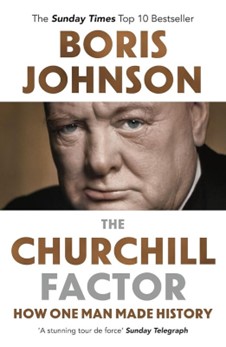
Winston Churchill has been the subject of countless biographies, analyses, and historical dissections. Yet in ‘The Churchill Factor,’ Boris Johnson — former Mayor of London and future UK Prime Minister — attempts something different: a vivid, punchy, and deeply personal portrait of one of Britain’s most iconic leaders. The result is a book that is equal parts admiration, argument, and idiosyncrasy — much like its subject.
From the outset, Johnson makes no attempt to hide his reverence. For him, Churchill is not merely a historical figure but a phenomenon — a “one-man life-force” who saved Western civilization. The tone is assertive and often theatrical, making the book feel more like a political rallying cry than a sober biography. But that’s also its charm: this is not just history, it’s entertainment.
Johnson’s core thesis is simple: Churchill mattered. He argues that without Churchill, Britain — and perhaps the world — would not have survived the 20th century intact. The book is filled with rhetorical questions, sharp analogies, and Johnson’s signature wit, all used in service of one central point — that leadership, charisma, and personal force can shape the course of history.
To make his case, Johnson zooms in on Churchill’s oratory, decision-making, military career, and sheer willpower. He praises Churchill’s ability to galvanize a nation with words alone, and to make moral choices — such as standing up to Hitler — when others urged compromise. The narrative moves quickly, jumping across time periods, with Johnson drawing frequent comparisons to modern politics and even to his own experiences in public life.
That’s where things get more complicated. While Johnson is an engaging writer, his book is as much about Churchill as it is about Johnson’s worldview. His admiration sometimes borders on hagiography, and his political biases seep into the text. He dismisses Churchill’s critics, downplays his colonial views, and often glosses over major controversies — such as the Bengal famine — with a brief paragraph or a clever quip. This makes for a breezy read, but not always a balanced one.
Still, it would be unfair to say ‘The Churchill Factor’ lacks insight. Johnson has clearly done his homework, and his informal tone makes complex events surprisingly accessible. For younger readers or those new to Churchill, the book offers a dynamic introduction to the man and his moment. It also raises timely questions about leadership: what makes a great leader, and do such figures still exist in the age of committees, polls, and political correctness?
Stylistically, the book reads like a political op-ed stretched into a biography. It’s bold, occasionally bombastic, and peppered with Latin phrases and literary references. Johnson’s flair for storytelling and dramatic framing turns even minor episodes into cinematic scenes. Whether you find that delightful or exhausting will depend on your taste.
In the end, ‘The Churchill Factor’ is less about understanding Churchill in full and more about defending the idea of Churchill — the notion that individuals with vision and guts can still change the world. That idea may be naïve, or even dangerous, in the hands of the wrong people. But it is also, undeniably, inspiring.
Verdict:
A compelling, flawed, and provocative tribute to a giant — and a revealing glimpse into the mind of another ambitious politician. Don’t read it as pure history, but do read it. It’s too bold to ignore.






















Залишити відповідь