


-
ВОЄННИЙ Щоденник



-
Життя






-
FICTION/OPINION COLUMN









-
Нетлінне
-







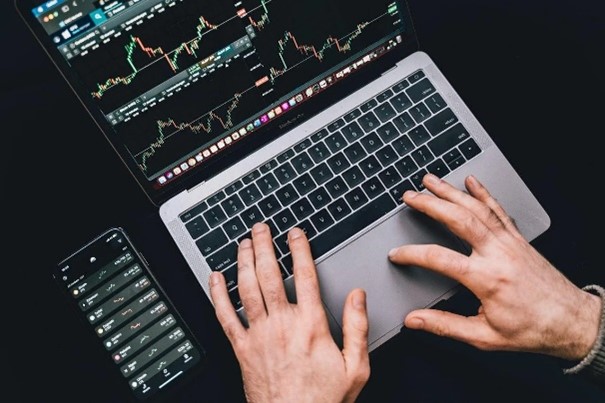
The stock market has long been a symbol of both opportunity and risk. For decades, it has been a place where investors, both seasoned and new, place their bets on the future of businesses and economies. However, the volatility of recent years, driven by economic shifts, political uncertainty, and global crises, has made many question the stability and predictability of these financial markets. So, what lies ahead for the stock market?
In recent years, stock exchanges around the world have witnessed dramatic fluctuations. The pandemic, the Russian-Ukrainian war and tariff conflicts triggered an economic downturn that led to one of the most significant stock market crashes in history. In the wake of this, we saw a rapid recovery, driven by government interventions, digital transformations, and new investment behaviors. However, as we slowly recover from this crisis, new challenges are emerging: geopolitical instability, rising inflation rates, and the ongoing war in Ukraine, to name just a few.
One of the major concerns now is the growing tension between traditional financial markets and the rapid evolution of digital currencies and blockchain technology. Cryptocurrencies like Bitcoin and Ethereum have captivated the public imagination, offering an alternative to centralized financial systems. While these digital assets are still volatile and speculative in nature, their rise has ignited discussions about the future of traditional stock exchanges. Could we be witnessing the dawn of a new era where decentralized finance takes center stage, leaving the stock market in its wake?
At the same time, stock exchanges are evolving to meet the demands of the digital age. The introduction of high-frequency trading (HFT), algorithmic trading, and other technological innovations has transformed the landscape of global finance. These innovations have made it easier to trade stocks at lightning speed, but they’ve also introduced a new set of risks, such as flash crashes and market manipulation. As a result, regulators are grappling with how to ensure market integrity while embracing technological progress.
Another factor influencing the future of the stock market is environmental, social, and governance (ESG) investing. In recent years, more investors are prioritizing companies that align with sustainable practices, human rights, and transparent governance. This shift is being driven by both consumer demand and growing concerns about climate change. Companies that fail to adopt ESG principles may find themselves losing favor with investors, especially as younger generations are increasingly concerned with social responsibility. This trend is reshaping the landscape of global finance, as investors place more emphasis on ethical business practices alongside financial returns.
Looking ahead, the stock market will likely continue to be a reflection of the broader geopolitical and economic environment. Factors such as global trade tensions, climate change, and the rise of new financial technologies will influence the market’s direction. For investors, it will be crucial to adapt to these changes, leveraging both traditional financial strategies and newer approaches to navigate uncertainty.
In conclusion, the stock market remains as relevant as ever, but its future is far from predictable. As the world continues to evolve, investors will need to stay informed, flexible, and prepared for the challenges and opportunities that lie ahead. Whether the next decade will see the rise of decentralized finance, a renewed focus on sustainability, or something entirely new, the stock market will continue to play a pivotal role in shaping the future of global finance.
























Залишити відповідь