


-
ВОЄННИЙ Щоденник



-
Життя





-
FICTION/OPINION COLUMN






-
СПОРТ



-
Нетлінне
-







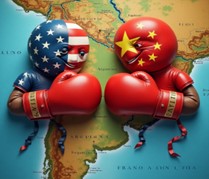
In recent years, Latin America has turned into a new arena for geopolitical rivalry between two global powers — the United States and China. This competition is not only economic but also strategic, as both countries seek to expand their influence over the region’s resources, infrastructure, and political alliances.
In April 2025, the US government announced a $360 million investment plan to create a new logistics hub for Antarctic expeditions in Ushuaia, Argentina — a move seen as a direct response to the growing Chinese presence in the region. The hub, according to US officials, will serve research purposes, but experts believe its strategic location near the Drake Passage gives it significant geopolitical weight. Meanwhile, China continues its long-standing engagement in Latin America through infrastructure investments, mining contracts, and its signature Belt and Road Initiative.
For many Latin American nations, this rivalry presents both opportunities and risks. On the one hand, it offers access to funding, technology, and markets. On the other, it forces governments to navigate a delicate balance between competing powers. Argentina, for example, has received substantial Chinese loans for energy and transport projects while maintaining strong ties with the US and IMF.
Chile is another example of China’s increasing influence. Beijing has invested heavily in lithium mining — a resource critical for electric vehicle production — and now operates several astronomical observatories in the country’s north. Although these facilities are officially civilian, American intelligence has expressed concern about their potential dual-use nature.
According to analysts, China’s soft power strategy in Latin America relies heavily on trade and diplomacy. Chinese companies have become major players in Brazil, Peru, and Ecuador, often offering loans with fewer political strings attached than Western institutions. At the same time, the US has intensified its diplomatic outreach, warning regional allies about the risks of economic overdependence on Beijing.
This complex geopolitical game is further complicated by domestic instability in several Latin American countries. Corruption, inequality, and political polarization make these nations vulnerable to foreign influence and economic pressure. In this context, both China and the US see Latin America as a strategic frontier that could shape the global order in the decades to come.
As of 2025, the new “Cold War” in Latin America is far from being a military conflict. Yet, its consequences are already being felt — from infrastructure corridors in the Amazon to ports in the Caribbean. The question remains: will Latin American countries be able to benefit from this competition without losing their independence?
























Залишити відповідь