

-
ВОЄННИЙ Щоденник







-
FICTION/OPINION COLUMN



-
ФОТОБУК






-
Нетлінне
-





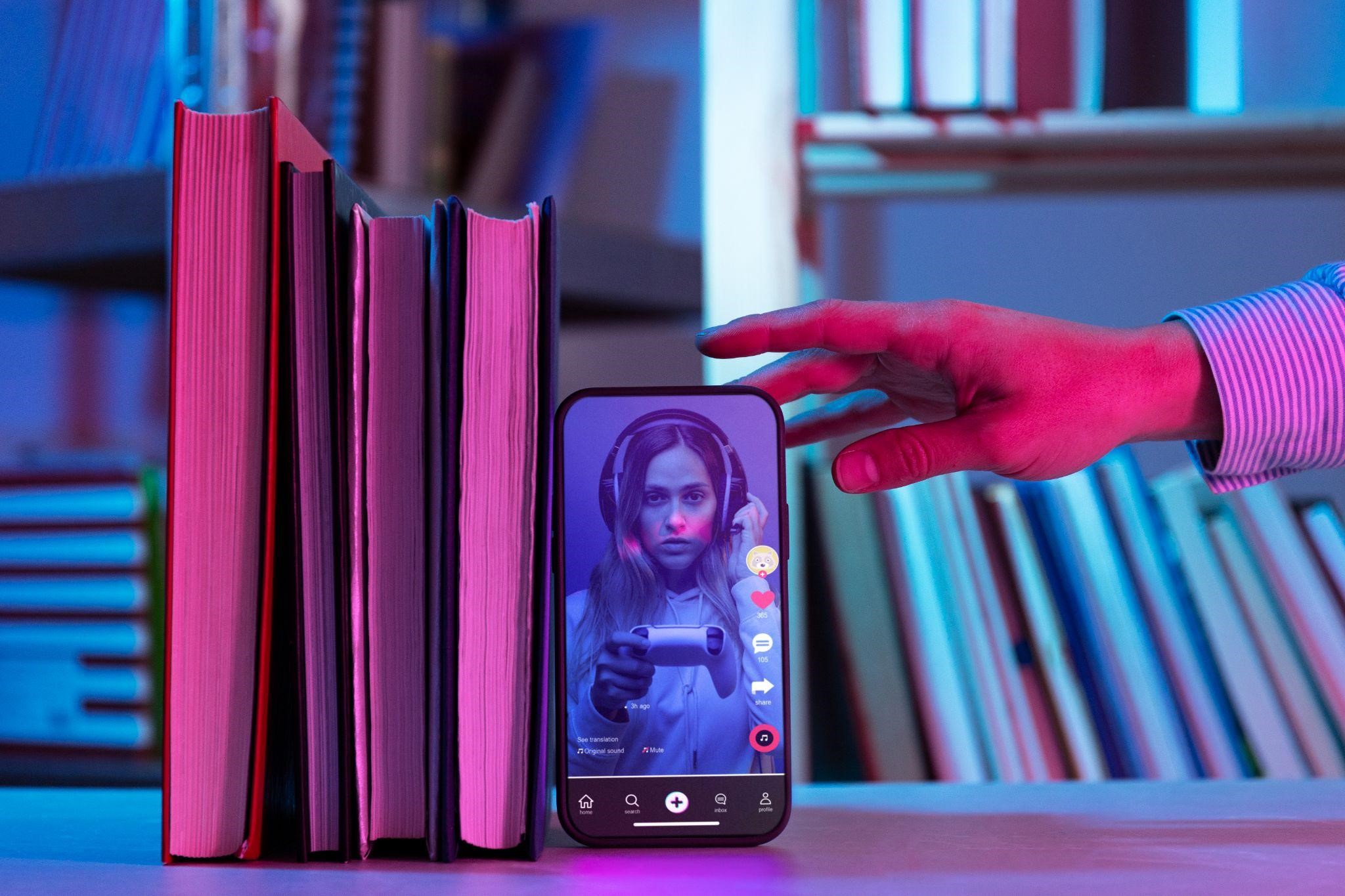
“TikTok is supposed to rot your brain!” At least that’s what everyone says. And yes, I’ve wasted hours of my life and sleep on funny cat videos and chaotic dances and lip sync trends. But somewhere in between memes, music and people crying over their exes, I accidentally started learning useful things (without any effort). No joking, I’d say that TikTok is one of the weirdest and most surprisingly educational free platforms on the internet.
Daily English slang? TikTok.
Through TikTok I learnt, for instance, what “delulu” means, how people use “ate” and “slay”, and that “it’s giving” is a full sentence. TikTok comments also helped me to get and memorize some abbreviations like “fr”, “sus”, “tbh”, “wdym”, “dw”, “lmao”, etc. No textbook ever taught me that. Not even Duolingo or similar learning apps.
Moreover, due to the short video format, spoken videos are easy and natural to perceive. In fact, they are vlogs, but no longer than 3 minutes long, and by watching them, you can train your listening skills in spoken English or any other language you are learning.
Current trends? TikTok again.
I find out what’s going on in the world not only from the news but, e.g., from a girl doing her makeup routine while explaining the US election system or from an artist drawing a picture while talking about their experience of visiting a concert of Billie Eilish. And I trust them and listen with sincere interest.
Art, music, fashion, culture, weird random history facts and professional tips? Guess what, it’s TikTok again.
One minute I can laugh at a funny orange cat video, the next — I’m watching a 30-second explainer on urbanism problems, a 5-minute history of Ukrainian independence, and then I see what mediaeval tower stairs looked like and how people used to walk there. After all that stuff, I can watch videos about cool fashion hacks from a stylist or get a fantastic makeup tutorial I can recreate in real life. TikTok is so random, messy and addicting, but if you often watch and like educational videos, your TikTok algorithm can transform into something impressive, inspiring and suitable.
And don’t even get me started on health TikTok.
Unbelievable, but certainly TikTok helped me understand what dissociation and social anxiety are, how exactly ADHD and high-functioning depression show up in real life, and explained the causes of panic attacks and how to react in cases they happen. I must say that these videos made me look for more detailed information about these mental health conditions, and I even started reading books and articles about it.
Of course, not everything is verified and absolutely true on this platform; anyway, TikTok is definitely not a university. But it’s a place where education doesn’t feel like education. You can be really sleepy, eat your meal or even lie in bed with the flu but still accidentally, without even trying, pick up some knowledge. And maybe that’s the whole point. Learning doesn’t always happen in a classroom. Sometimes, you can get something new and important just by scrolling somewhere between memes. It’s a lazy, funny and easy way, but it’s working.
So no, TikTok isn’t just brainrot. It won’t replace real education, but it’s not supposed to, right? And honestly? I kind of love it.





















Залишити відповідь