


-
ВОЄННИЙ Щоденник
-
FICTION/OPINION COLUMN


-
ФОТОБУК


-
Нетлінне
-






I got this book precisely one year after the full-scale invasion began. And it was the wildest thing to do that day. After the tortured bodies in Bucha and Irpin’, I understood what the reportage collection Wojciech Tochman’s ‘Like Eating a Stone’ was about.
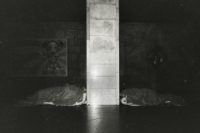
The shocking plot of the book begins in 1999, 4 years after the end of the war in Bosnia and Herzegovina. A group of scientists led by Mrs. Eva Klonowska is searching for mass burials of Muslims. “The bones talk to me,” she says. During her entire stay here, she found more than 2,000 bodies. All of them are lying in body bags on the floor in Lusci Palanka’s assembly hall. Surviving Muslims from all over the world come here to find their dead parents, friends, siblings, and finally bury them. Not everyone is so lucky.
Many couples bring children with them. “Why?” asks Eva. “So they’ll remember,” everyone answers in the same way. Everytime. But Jasna (Jasmina) stands alone. She has no one to bring with her. Instead, she is looking for the bodies of her husband, son and daughter, which she should take away and bury according to the customs of Islam. Also, several more women who seek justice and revenge appear in the book. One of them, Halima, grinds her teeth at night from the pain she has experienced. Her surviving son says she sounds like a stone eater. This stone has been pressing on her for a long time, but it’s impossible to swallow it.
Tochman relentlessly describes what happened. He knows exactly who’s the victim and who is guilty. But the question remains without answer: how can yesterday’s enemies live in the same country? According to the Dayton Agreements, Bosnia–Herzegovina was divided into 2 parts, almost along the by ethnic composition. What about the “gray zones” where Serbs live in Muslim homes and Muslims live in Serb homes across the street? When I imagine it as if it happened in my village, it becomes especially scary.
The only thing that gets in the way is the big-time jumps. The story is somewhat confusing; the facts are sometimes repeated because the Bosnians have the same grief. But the Bosnian Serbs feel divided. They are waiting for Serbia to announce the “unification of all lands.”
With this work, Tochman became a finalist for The Nike Literary Award (2003). Last year, the book was translated into Ukrainian by Choven Publishing. “I didn’t expect that one day I would have to face a denser darkness and a deeper sadness. The book is quite small: a month of work, and impressions for a lifetime,” noted Andriy Bondar, the translator.
Now Ukraine is experiencing the same darkness. The enemies are different, but their methods remain the same. We must make maximum efforts so that history does not repeat itself this time…
My rating is 9.5/10.










Залишити відповідь